
KRAV MAGA EXPERTS

OUR TRAINING PHILOSOPHY

INTRODUCTORY NOTES

The Krav Maga Experts curriculum is a structured path that takes complete beginners and develops them into confident, capable practitioners who can perform under real pressure and return to safety.

The system moves through four tiers. The Survivor builds awareness, striking fundamentals, movement, and the ability to recover when things go wrong. The Fighter introduces timing, resistance, and controlled aggression, training students to stay functional when the exchange gets hard. The Protector expands into weapons defense, multiple attackers, environmental awareness, and the responsibility of keeping others safe. The Warrior is where adaptability, leadership, and high-level decision-making under stress become the standard.

Every level builds directly on the previous one through a clear progression of skills, pressure drills, scenario training, and performance standards. This is not a random collection of techniques. It is a complete training system built to develop real self-defense ability, fighting performance, and the mental and physical resilience to handle whatever comes.

Tier 01 of 04

Survivor

3 LevelsP1 — P2 — P3
Survivor Tier
Level P1
Foundation — Movement, Striking & Immediate Response
P1
What This Level Tests

The ability to react immediately, maintain a correct fighting structure, use clear voice when needed, and move with purpose instead of waiting for a perfect moment. No hesitation. No dropped hands. No standing still.


Testing Standards
PressureCooperative and predictable
FitnessBasic coordination, balance, stamina for short technical rounds
DecisionLow — respond correctly to clear inputs

Pass / Fail Indicators

Pass

  • Reacts immediately to attack
  • Guard stays up throughout
  • Moves with purpose after striking
  • Clear voice on boundary drill
  • Correct stance recovery after disruption

Fail

  • Freezes before responding
  • Drops hands after striking
  • Stands flat and static
  • Rushes without range awareness
  • Waits for clean start before acting
Skills — Know All Of These
  • Jab
  • Cross
  • Hook
  • Uppercut
  • Front Kick
  • Side Kick
  • Knee Strike
  • Fighting Stance
  • Basic Movement
  • Get Up — Tactical
  • Get Up — Figure 4
  • Basic Choke Defense
  • Basic Wrist Release
  • 360 Introduction
  • Vulnerable Targets Awareness
Survivor Tier
Level P2
Function After Contact — Ground Positions & Close Range
P2
What This Level Tests

The ability to continue working once the attacker has already made contact. Recognize ground positions quickly, choose the right escape, and return to movement without panic. Continuing after contact is the standard — not resetting.


Testing Standards
PressureControlled resistance with contact and discomfort
FitnessModerate stamina, enough mobility to recover from floor repeatedly
DecisionLow to Moderate — correct position recognition under controlled resistance

Pass / Fail Indicators

Pass

  • Recognizes ground position fast
  • Chooses correct escape for each position
  • Returns to movement after escape
  • Continues after contact without panic
  • Inside defense timed with counter

Fail

  • Freezes or panics after contact
  • Misreads ground position
  • Uses strength instead of position
  • Stops after first escape attempt
  • Waits for instructor to rescue exchange
Skills — Know All Of These
  • Mount Escape — Tunnel Escape
  • Guard Position Recognition
  • Kick Away from Guard
  • Stand Up from Guard
  • Back Position Awareness
  • Inside Defense
  • 360 Defense
  • Ground Position Awareness
  • Headlock Defense — Roll Under
Survivor Tier
Level P3
Recovery Under Pressure — Continue After Disruption
P3
What This Level Tests

The ability to keep acting after being hit, disrupted, or knocked down. The student must recover under pressure, stay functional when the exchange is no longer clean, and find an exit without waiting for comfort to return. Stopping after the first hit is a fail.


Testing Standards
PressureActive resistance with real disruption and repeated recovery demands
FitnessAbility to sustain repeated recovery efforts under moderate fatigue
DecisionModerate — identify exits in multiple directions during contact

Pass / Fail Indicators

Pass

  • Recovers after impact without pause
  • Head movement connected to counter
  • Multiple get-up attempts without giving up
  • Sees exits while still engaged
  • Continues after failure without collapse

Fail

  • Freezes after first hit
  • Loses awareness after disruption
  • Static head and flat feet throughout
  • Tunnel vision — misses available exits
  • Needs reset before responding again
Skills — Know All Of These
  • Head Movement
  • Slip And Counter
  • Ground Recovery Under Pressure
  • Transition Between Positions
  • Front Rolls
  • Back Rolls
  • Side Headlock Defense
  • Leg Sweep
  • Ankle Trap
  • Side Control Escape — Frame To Guard
Tier 02 of 04

Fighter

4 LevelsP4 — P5 — G1 — G2
Fighter Tier
Level P4
Multiple Variables — Movement & Space Management
P4
What This Level Tests

The ability to handle additional threats while keeping control of movement, positioning, and decision-making. The student must stop trying to dominate one exchange and start managing the environment. Disrupting and moving is the priority — not finishing.


Testing Standards
PressureMultiple variables, continuous movement, live decisions
FitnessRepeated bursts of movement under pressure with limited rest
DecisionModerate to High — manage space against multiple threats

Pass / Fail Indicators

Pass

  • Keeps moving — does not stall
  • Manages space against 2 attackers
  • Chooses exits without fixating
  • Uses improvised shield effectively
  • Avoids going to ground in multi-attacker context

Fail

  • Fixates on one attacker
  • Stands still after contact
  • Allows flanking without adjusting
  • Goes to ground with multiple threats live
  • Breaks structure when pressure rises
Skills — Know All Of These
  • Combination Flow
  • Clinch Entry
  • Elbow Strikes
  • Hammer Strikes
  • Basic Grappling Transition
  • Guard Retention (Basic)
  • Managing Encirclement
  • Ground Avoidance — Multi-Attacker Context
  • Improvised Shields — Bag / Umbrella / Keys
Fighter Tier
Level P5
Enter With Intent — Control the Exchange
P5
What This Level Tests

The ability to stop waiting for the fight to happen and start entering with purpose. The student must set up entries, defend takedowns, use basic wrestling responsibly, and transition between striking and grappling without confusion. Every entry must have a reason.


Testing Standards
PressureControlled to active resistance with real entry and takedown pressure
FitnessRepeated 2-minute rounds with active clinch and takedown pressure
DecisionHigh — purposeful range selection and entry timing

Pass / Fail Indicators

Pass

  • Entries are set up — not random
  • Sprawl is timed correctly
  • Transitions between ranges without confusion
  • Correct range tool selection
  • Wrestling used only when appropriate

Fail

  • Crashing forward without setup
  • Late sprawl — hips stay up
  • Forcing grappling when range should stay open
  • Losing structure after first success
  • No follow-up decision after takedown defense
Skills — Know All Of These
  • Entry With Intent
  • Jab-Cross Entry To Clinch
  • Basic Wrestling Entry
  • Basic Takedown Literacy
  • Tackle Defense / Sprawl
  • Sweep From Guard
  • Rear Headlock Defense
  • Top Position Control
  • 2v1 Management
Fighter Tier
Level G1
Full Range Integration — Striking, Grappling & Ground
G1
What This Level Tests

Full integration across all ranges under live resistance. The student must fight across striking, clinch, and ground without losing cohesion, self-correct during rounds, and accurately debrief their own choices after the exchange. Hiding in a favorite range is a fail.


Testing Standards
PressureActive to hard live resistance with fatigue and transition pressure
FitnessMultiple 3-minute live rounds with functional output in every range
DecisionHigh — self-correction mid-round, accurate post-round debrief

Pass / Fail Indicators

Pass

  • Transitions between ranges without breaking down
  • Continues after failed entries
  • Can debrief clearly what broke and why
  • Output maintained across full 3-minute rounds
  • No range avoidance

Fail

  • Good isolated technique but poor continuity
  • Emotional drop after failed exchange
  • Cannot explain what broke down
  • Avoids ground or avoids clinch
  • Needs instructor to restart after failure
Skills — Demonstrate Integration Of These
  • Integrated Range Transition
  • Striking To Clinch Transition
  • Clinch To Ground Transition
  • Ground To Stand Transition
  • Defending Takedowns While Striking Back
  • Maintaining Structure In Longer Rounds
Fighter Tier
Level G2
Stick Introduction — Range, Defense & Weapon Logic
G2
What This Level Tests

Understanding how the stick works — attack lines, range, and control of the armed limb. The student must defend, control the weapon side, and explain when escape is still the better answer. Stick only at this level. No knife, no firearm.


Testing Standards
PressureControlled to active weapon rounds with clear safety limits
FitnessRepeated 2-minute rounds with sudden entries and fast angle changes
DecisionHigh — engage vs disengage, correct weapon-arm targeting

Pass / Fail Indicators

Pass

  • Reads attack line before reacting
  • Controls weapon-side arm correctly
  • Can explain why each defense works
  • Knows when to disengage instead of engage
  • Exits after defense — does not linger

Fail

  • Treats stick like an unarmed attack
  • Closes from the wrong line
  • Grabs body instead of weapon arm
  • Cannot explain the attack angles
  • Stays in wrong range after defense
Skills — Know All Of These
  • Stick Attack Pattern Recognition
  • Stick Range Understanding
  • Basic Stick Use
  • Stick Defense
  • Stick Limb Control
  • Engage vs Disengage Decision — Stick Context
  • Striking To Grappling Transition — Stick Arm Control
Tier 03 of 04

Protector

3 LevelsG3 — G4 — G5
Protector Tier
Level G3
Knife Introduction — Weapon Arm Control & Protection Logic
G3
What This Level Tests

Recognition of knife attack lines, correct weapon-arm control, and the ability to switch between disengagement, striking, and grappling based on what is available. Choices now affect other people — the student must begin thinking as a protector.


Testing Standards
PressureActive weapon rounds with layered entries and resistance
FitnessRepeated 2-minute mixed rounds with higher decision demand
DecisionHigh to Complex — weapon recognition, protection priorities

Pass / Fail Indicators

Pass

  • Reads knife line before closing
  • Two-hand control on weapon arm
  • Positions correctly to protect others
  • Uses improvised tools practically
  • Grappling transition without releasing weapon arm

Fail

  • Freezes at sight of knife
  • Closes from the wrong side
  • Grapples without controlling armed limb
  • Exposes others when protecting self
  • Speed alone — no control plan
Skills — Know All Of These
  • Stick Defense — Advanced Entries
  • Stick Use — Basic Offensive Application
  • Knife Introduction — Attack Pattern Recognition
  • Knife Range Understanding
  • Weapon Arm Control
  • Weapons Of Opportunity — Basic
  • Grappling Transition Under Weapon Pressure
Protector Tier
Level G4
Knife Control — Draw Interruption & Weapon Retention
G4
What This Level Tests

The ability to see the draw, interrupt it early, and deny re-draw. Knife problems punish hesitation. The student must think earlier, commit cleaner, and know when the answer is to leave — and when leaving is no longer an option.


Testing Standards
PressureActive to hard resistance in controlled armed environments
FitnessRepeated armed rounds with short recovery
DecisionComplex — draw recognition timing, retain vs disengage

Pass / Fail Indicators

Pass

  • Recognizes draw cues — not guessing
  • Interrupts before weapon clears
  • Body-connected control on weapon arm
  • Denies re-draw under active resistance
  • Transitions to grappling without releasing arm

Fail

  • Reacts only after weapon is already live
  • Arm-only grip — no body connection
  • Loses weapon arm during position change
  • Half-committed interruption attempt
  • Cannot distinguish a bad fight from a necessary one
Skills — Know All Of These
  • Knife Defense — Basic Control Responses
  • Draw Recognition
  • Draw Interruption
  • Weapon Retention Fight — Knife Context
  • Stick Use — Offensive And Defensive Continuation
  • Armed Limb Control Under Resistance
  • Transition To Grappling While Denying Re-Draw
Protector Tier
Level G5
Mixed Threats — Priorities & Tactical Decision-Making
G5
What This Level Tests

The ability to manage mixed armed and unarmed scenarios with correct prioritization. The student must think in priorities — not just answers. The right response protects what matters most and keeps the problem from growing. Same response every time is a fail.


Testing Standards
PressureHard controlled resistance with mixed armed and unarmed scenarios
FitnessSustained 3-minute mixed rounds with repeated decision shifts
DecisionComplex — priority sequencing, control vs strike selection

Pass / Fail Indicators

Pass

  • Solves the highest-cost threat first
  • Switches tools correctly when weapon changes
  • Uses striking where striking is right
  • Uses control where control is right
  • Maintains peripheral awareness during engagement

Fail

  • Same response pattern regardless of input
  • Solves low-priority problem while armed threat is live
  • Overcommits to one attacker
  • Uses stick logic at knife range or vice versa
  • Complete tunnel vision during engagement
Skills — Know All Of These
  • Knife Defense — Higher Pressure Integration
  • Stick Use — Higher Pressure Integration
  • Weapons Of Opportunity — Expanded Use
  • Mixed Threat Priority Setting
  • Control Versus Striking Decision
  • Transition — Striking, Grappling, Ground Control
  • Armed And Unarmed Threat Management
Tier 04 of 04

Warrior

2 LevelsE1 — E2
Warrior Tier
Level E1
Black Belt Standard — Full Integration & Leadership
E1
What This Level Tests

Full integration of all prior levels plus firearm defense and retention. The student must be able to teach, demo, fight, and debrief at a high standard. This is the beginning of mastery — the student must demonstrate judgment, not just technique.


Testing Standards
PressureHard controlled resistance with expert-level judgment requirements
FitnessRepeated 3-minute high-focus rounds with technical control under fatigue
DecisionVery High — firearm line control, leadership, self-assessment

Pass / Fail Indicators

Pass

  • Muzzle line controlled throughout firearm work
  • Can teach, demo, and apply under pressure
  • Accurate post-round debrief
  • Directs others clearly while under personal threat
  • Weapon arm never released during grappling

Fail

  • Reaching for weapon before redirecting line
  • Can perform but cannot teach
  • Can fight but cannot analyze own performance
  • Ignores others when leading is required
  • Line crosses body during firearm control
Skills — Know All Of These
  • Pistol Defense
  • Pistol Retention
  • Rifle Defense
  • Rifle Retention
  • Firearm Draw Interruption
  • Close-Range Firearm Control
  • Weapon Arm Control Under Firearm Pressure
  • Mixed Armed And Unarmed Decision Integration
  • Leadership Under Stress
Warrior Tier
Level E2
Extreme Integration — Active Threat & Environmental Control
E2
What This Level Tests

Operation under the most complex and unpredictable conditions. The student must read the environment, control line and space, transition between impact, takedown, and retention, while protecting others and denying follow-up harm. Seeing only the weapon — not the environment — is a fail.


Testing Standards
PressureHard controlled resistance with expert-level scenario complexity
FitnessRepeated 3-minute expert rounds with high cognitive load and explosive entries
DecisionVery High — sequencing, environment use, bystander awareness

Pass / Fail Indicators

Pass

  • Uses environment before committing body
  • Entry is decisive with consequence awareness
  • Line safety maintained throughout
  • Bystander lines managed during engagement
  • Correct tool when weapon malfunctions

Fail

  • Chases weapon — ignores environment
  • Partial entry — no follow-through
  • Static after first contact
  • Engages without considering bystander lines
  • Freezes when gun is not operational
Skills — Know All Of These
  • Active Shooter Response — Handgun / Rifle
  • Disarming From All Sides
  • Tackle And Control
  • Rifle Threat Management
  • Rifle As Cold Weapon vs Stick Or Knife
  • Pistol As Cold Weapon In Malfunction
  • Pistol As Cold Weapon To Create Space And Control
  • Environmental Control Under Firearm Threat

Get News, Updates, Special Event Notices and More When You Join Our Email List

The podcast

Get the latest insights on Self-Defense on our podcast

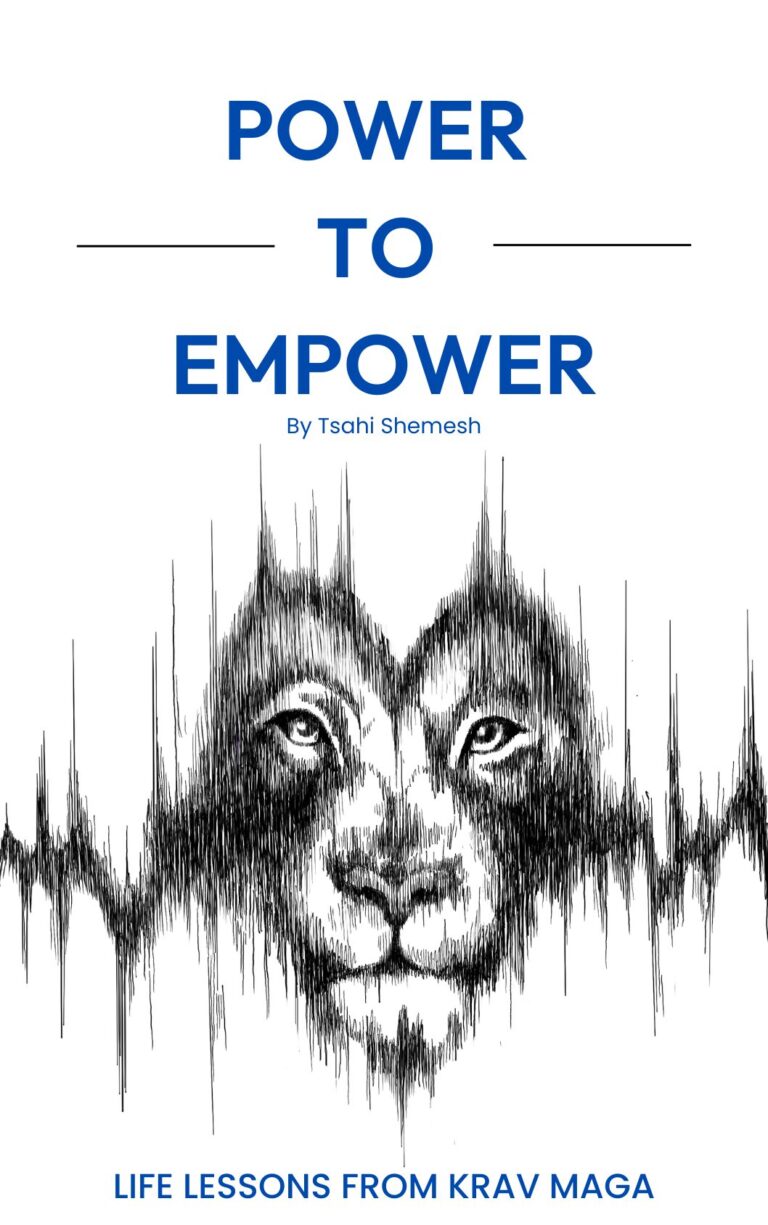
Pre-order our book now

A transformative journey blending the philosophies of life and the principles of Krav Maga. See how resilience can empower you, and those around you. Coming soon for pre-order.


KME Power to Empower book cover
KME phone screen 04
YOur empowerment starts today

For only $4.99/month we bring you empowering content, follow-along classes and quick workouts and much more directly to your phone
Name
Book cover for “Power to Empower” by Tsahi Shemesh