The Krav Maga Experts curriculum takes you from complete beginner to Expert. Someone who can fight, lead, and make decisions under pressure that protect more than yourself.
The system moves through four tiers. The Survivor builds awareness, striking fundamentals, movement, and the ability to recover when things go wrong. The Fighter introduces timing, resistance, and controlled aggression, training you to stay functional when the exchange gets hard. The Protector expands into weapons defense, multiple attackers, environmental awareness, and the responsibility of keeping others safe. The Warrior is where adaptability, leadership, and high-level decision-making under stress become the standard.
Every level builds directly on the previous one through a clear progression of skills, pressure drills, scenario training, and performance standards. It is a complete training system built to develop real self-defense ability, fighting performance, and the mental and physical resilience to handle any opponent.
The curriculum is organized into levels across the four tiers.
Each (P) Practitioner level requires 40–60 hours of training on average. Each (G) Graduate level requires 60–90 hours. (E) Expert levels require sustained engagement over time. The minimum time at any level before testing for the next is three months.
Hours accumulate from your training in the studio. Pace is up to you. Some students move through the system quickly. Others take years. The path is built around your engagement, not a timeline.
Testing is by invitation.
Your instructors evaluate your performance in class and you receive an invite to the next testing event. Visits and tenure are reference points, not requirements.
Students who reached a satisfying level of performance at their current level. Testing requires an active membership. Class packs and drop-ins do not qualify.
There is no fixed timeline. The path is built around your engagement.
All classes count, but you will need a variety of classes to build a well-rounded skill set.
We are tracking your progress and will send an invite when you are ready. Until then, train. The work prepares you whether or not testing is on your mind today. You can always ask your
instructors for guidance and advice on how to progress and prepare for your next level.
Hours and time at level still apply. If you return after a long absence, your instructors will assess where you are and what makes sense from there.
No. But it’s certainly recommended. Testing is available to students who want to pressure test their training. There are some students who train without testing, and that is a valid path. The skill is the most important thing we teach. The test is there to elevate you.
The ability to react immediately, maintain a correct fighting structure, use clear voice when needed, and move with purpose instead of waiting for a perfect moment. No hesitation. No dropped hands. No standing still.
The ability to continue working once the attacker has already made contact. Recognize ground positions quickly, choose the right escape, and return to movement without panic. Continuing after contact is the standard — not resetting.
The ability to keep acting after being hit, disrupted, or knocked down. The student must recover under pressure, stay functional when the exchange is no longer clean, and find an exit without waiting for comfort to return. Stopping after the first hit is a fail.
The ability to handle additional threats while keeping control of movement, positioning, and decision-making. The student must stop trying to dominate one exchange and start managing the environment. Disrupting and moving is the priority — not finishing.
The ability to stop waiting for the fight to happen and start entering with purpose. The student must set up entries, defend takedowns, use basic wrestling responsibly, and transition between striking and grappling without confusion. Every entry must have a reason.
Full integration across all ranges under live resistance. The student must fight across striking, clinch, and ground without losing cohesion, self-correct during rounds, and accurately debrief their own choices after the exchange. Hiding in a favorite range is a fail.
Understanding how the stick works — attack lines, range, and control of the armed limb. The student must defend, control the weapon side, and explain when escape is still the better answer. Stick only at this level. No knife, no firearm.
Recognition of knife attack lines, correct weapon-arm control, and the ability to switch between disengagement, striking, and grappling based on what is available. Choices now affect other people — the student must begin thinking as a protector.
The ability to see the draw, interrupt it early, and deny re-draw. Knife problems punish hesitation. The student must think earlier, commit cleaner, and know when the answer is to leave — and when leaving is no longer an option.
The ability to manage mixed armed and unarmed scenarios with correct prioritization. The student must think in priorities — not just answers. The right response protects what matters most and keeps the problem from growing. Same response every time is a fail.
Full integration of all prior levels plus firearm defense and retention. The student must be able to teach, demo, fight, and debrief at a high standard. This is the beginning of mastery — the student must demonstrate judgment, not just technique.
Operation under the most complex and unpredictable conditions. The student must read the environment, control line and space, transition between impact, takedown, and retention, while protecting others and denying follow-up harm. Seeing only the weapon — not the environment — is a fail.
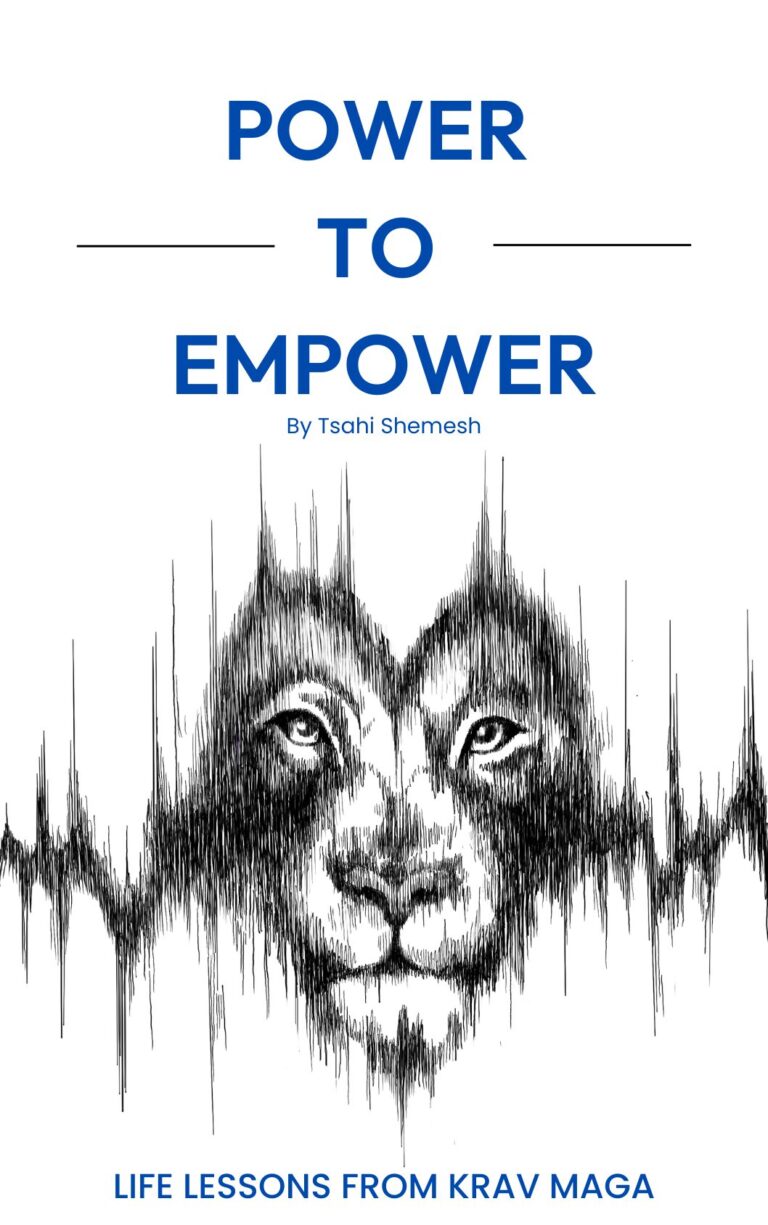
A transformative journey blending the philosophies of life and the principles of Krav Maga. See how resilience can empower you, and those around you. Coming soon for pre-order.


For only $4.99/month we bring you empowering content, follow-along classes and quick workouts and much more directly to your phone